
Structuring
Documents, business databases, and applications are connected, qualified, and organized into an usable foundation.
Secured
Deployable in your environment, with access rights, logs, traceability, and governance for AI usage.
Usable
Business applications, assistants, reports, and workflows access structured, sourced, and controlled data.
Nexus, an enterprise RAG platform for decision-making
Nexus addresses 'what is RAG', 'RAG vs fine tuning', and 'AI knowledge base' requirements with governed architecture, citations, and LLM cost control.
- Enterprise RAG platform: ingestion, retrieval, source-backed answers, observability.
- RAG whitepaper available through the CTA below to frame your implementation strategy.
Pilot AI projects fail when the data is not ready.
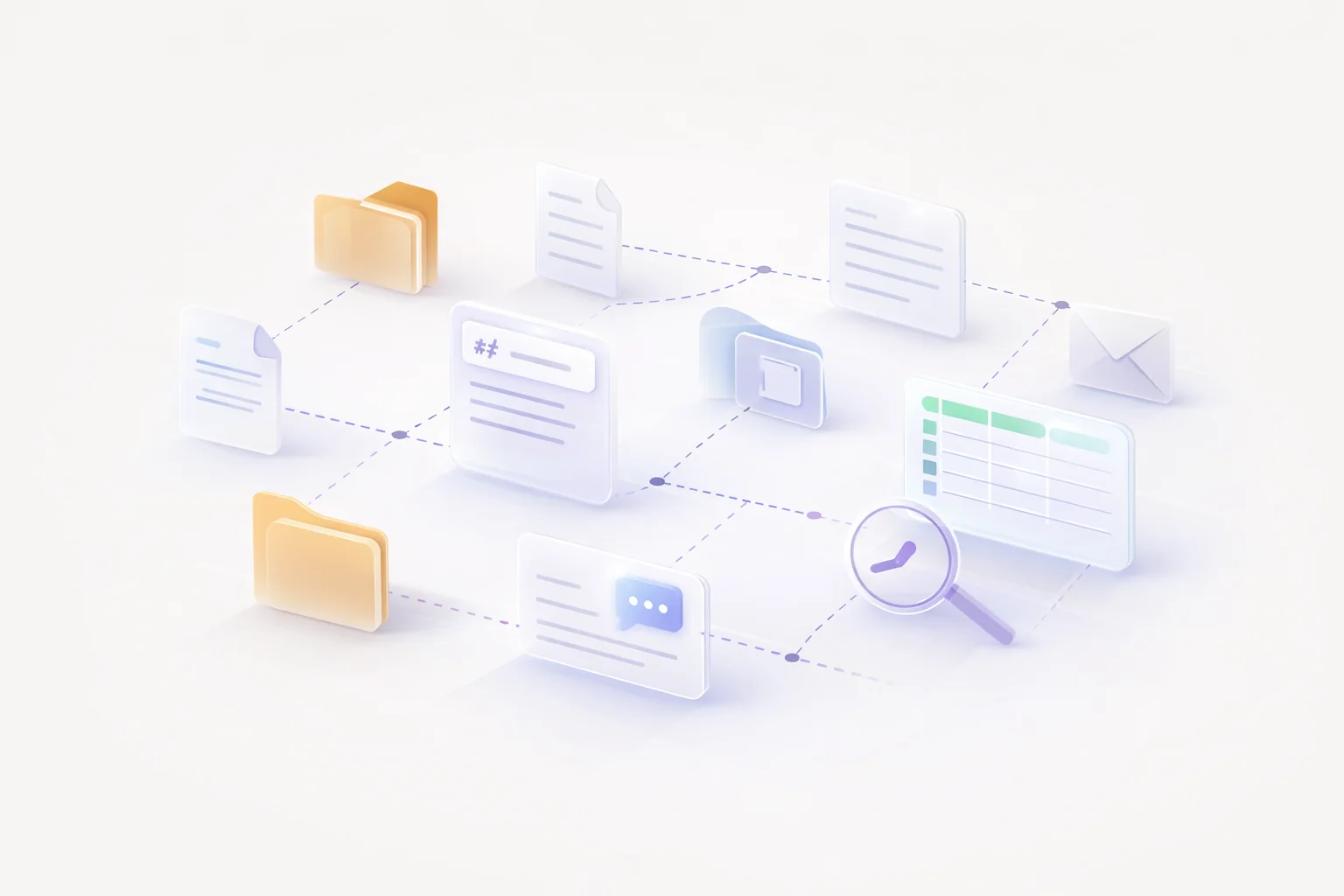
Scattered information
Documents, SQL databases, CRM, ERP, intranet, emails, wikis, and business tools do not naturally speak the same language.
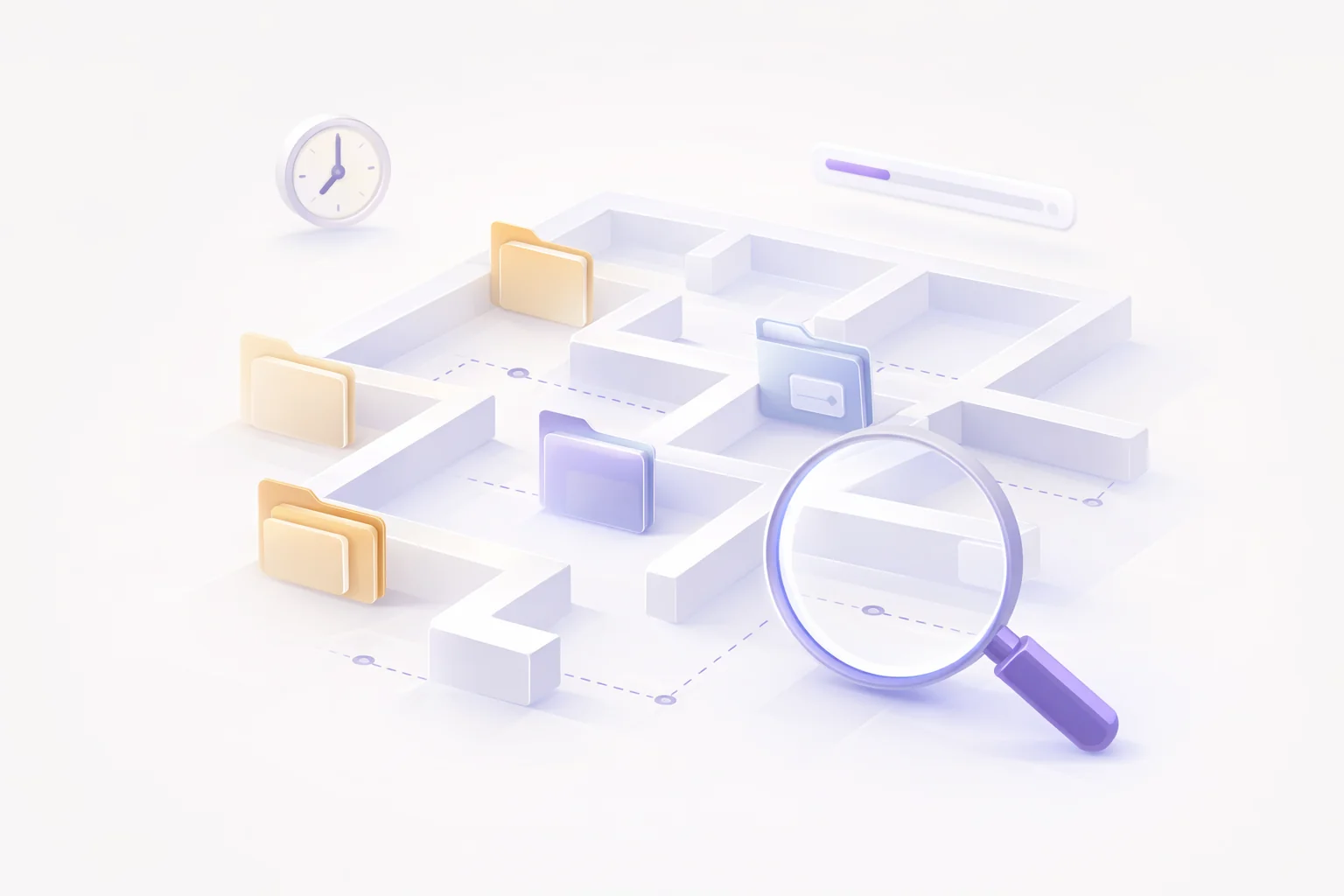
Unstructured data
Content exists, but it is not qualified, linked, secured, and ready to feed AI assistants or agents.
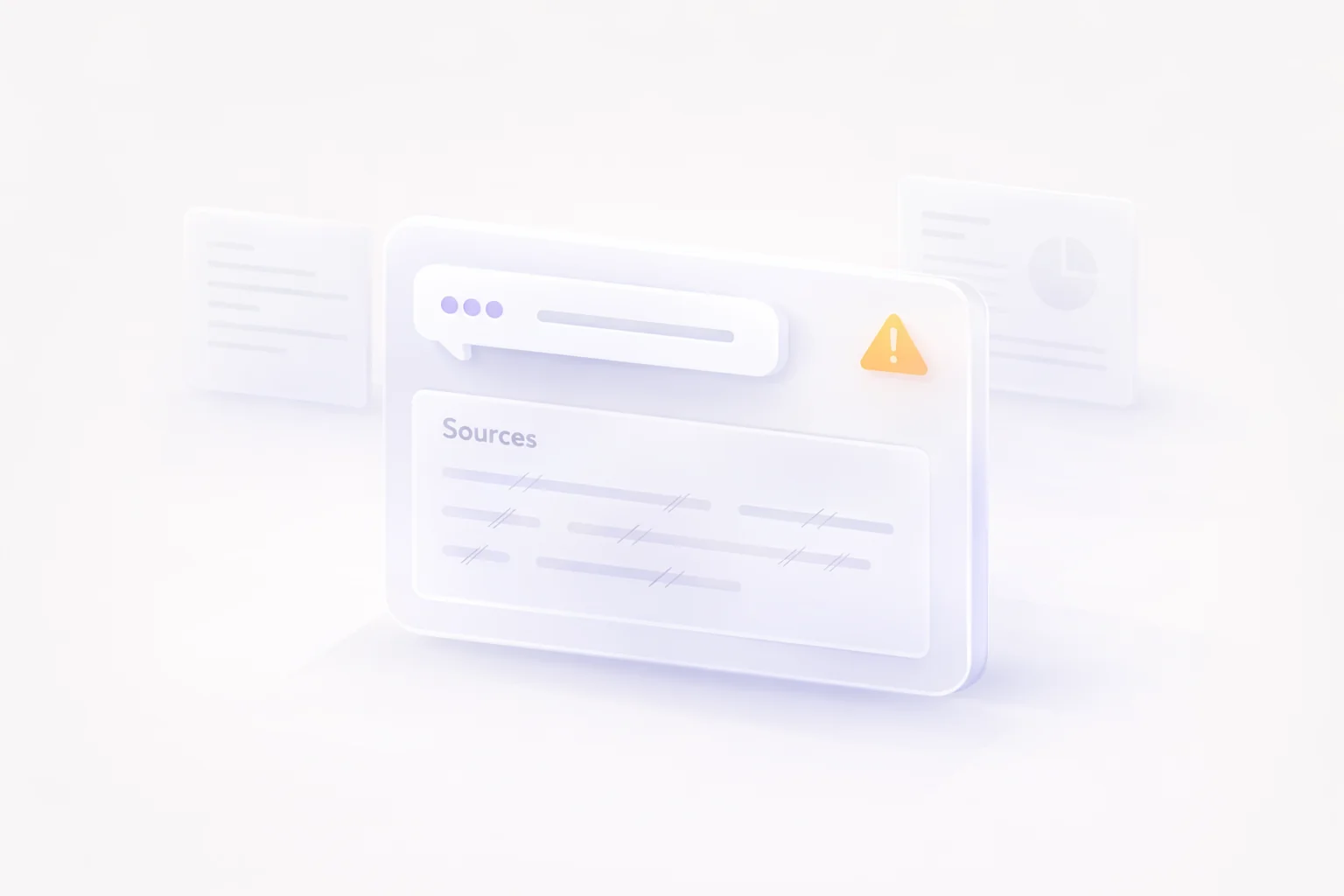
Answers without proof
Models answer quickly, but without reliable sources, clear access rights, and controllable costs.
The challenge is not adding another AI tool. The challenge is making business data accessible, structured, secured, and governable.
An AI assistant is an interface. Nexus is the foundation.
You are not only choosing an AI interface. You are choosing the foundational layer of your sovereign AI infrastructure.
Nexus SDK and Nexus MCP: two entry points to connect your information system and AI assistants
The SDK connects Nexus to business applications. MCP connects Nexus to compatible assistants such as ChatGPT and future enterprise agents. In both cases, Nexus remains the layer for governance, access rights, and traceability.
Durable memory, not ephemeral context
Store documents, artifacts, and work history. Your agent retrieves the right context at the right moment — even after days or weeks.
Built-in governance & security
Workspaces, permissions, traceability, retention. Memory stays controlled, auditable, and isolated by business perimeter.
Reliable retrieval with sources
Semantic + hybrid search, citations, metadata, and filters. Fewer hallucinations, more verifiable answers.
Two entry points: SDK + MCP
Nexus SDK serves portals, extranets, SaaS, and business applications. Nexus MCP serves compatible AI assistants with controlled read access based on the user's rights.
MCP compatible
Multi-model: OpenAI + Claude, Gemini, Mistral… via OpenRouter
 Mistral
 VS Code
 Claude Code
 OpenAI
 Continue
 Windsurf
REST API (OpenAPI) + Nexus SDK: The Nexus SDK is the gateway for integrating the REST API into any agent or application.
REST API (OpenAPI) + Nexus SDK:











Sources • index • audit
Three integration families: Auroramind modules, API/SDK/MCP, then the external catalog of 870+ applications.
View integrationsA persistent, governed memory layer between your interfaces and your sources.
Once Nexus is in place, you adapt it to each business vertical.
Internal support
HR, IT, health & safety procedures, onboarding, internal references: sourced, consistent answers accessible by role.
Customer support
Unified knowledge base: faster, consistent answers with citations when relevant.
CRM / Sales
Sales decks, proposals, standard replies, product documentation: the right info at the right time without digging through ten folders.
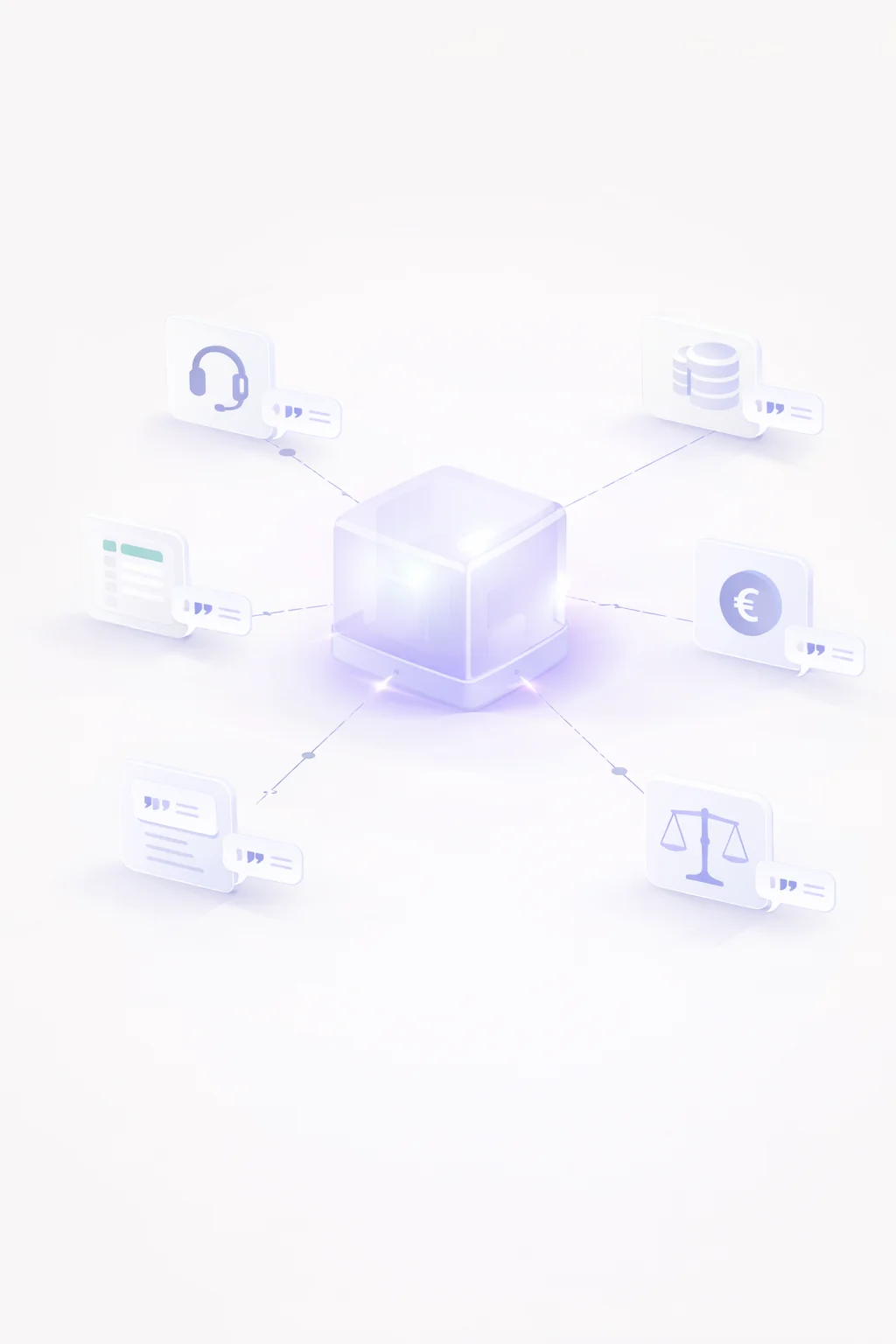
Monitoring & summaries
Content ingestion, summaries, and history: you capitalize instead of losing information across tabs.
Finance / procurement
Policies, contracts, tenders, supporting documents: find, verify, compare—faster and traceable.
Legal / compliance
Clauses, obligations, case files, collective agreements: find precise passages, cross sources, reduce version errors.
Training / content
Generate training materials, social media content, and blog posts: fast, consistent output grounded in your own sources.
Knowledge bases
Complex document bases, research articles, service-based categorization: ingest large volumes and let users query in natural language.
These examples are not a limit: Nexus adapts to any business vertical once sources, access rules, and workflows are scoped. The interface (chatbot, portal, widget, extension) then follows your use cases and information system.
Nexus speaks your language.
Nexus supports multilingual flows (inputs in one language and outputs in another). Separately, the admin interface is available in 5 languages: French, English, German, Spanish, and Portuguese.
Nexus integrates with the modules that feed, enrich, and use your AI foundation.
Chatbot
The conversational interface that queries Nexus in real time to deliver sourced, reliable, governed answers.
SideLens
From web to deliverable: SideLens extracts, analyzes, structures, and pushes content directly into Nexus to enrich your knowledge base.
Aurora Atlas
Automates web source collection, cleans pages, and feeds Nexus with RAG-ready corpora.
Nexus Pocket
Field capture, notes, meetings, and operational memory to turn conversations into usable knowledge in Nexus.
Silio
Business micro-app cockpit that consumes Nexus to prepare analyses, decisions, documents, and actions.
Automations
Agents, webhooks, and business workflows triggered from data structured, secured, and governed by Nexus.
+800 apps connectable to your AI infrastructure
Nexus connects your business sources, structures and secures them, then exposes the right data to use cases that need faster answers, reliable sources, and controlled actions.
Example input / output flows
(among hundreds of possibilities)
Support & incidents
Tickets and commits enrich Nexus to generate summaries and ready-to-share responses.
Inputs
 Jira
Jira GitLab
Outputs
 Teams
Teams Outlook
Inputs
Outputs
JiraGitLabTeamsOutlookSocial content & brand
Creative assets feed Nexus to generate posts and content variants.
Inputs
 Figma
Figma Canva
CanvaOutputs
 Facebook
 Instagram
Inputs
Outputs
FigmaCanvaFacebookInstagramMonitoring & Newsletter & Blog
Web sources are consolidated in Nexus, then turned into ready-to-send campaigns or blog articles.
Inputs
 Firecrawl
 Bright Data
Outputs
 Mailchimp
 WordPress
Inputs
Outputs
FirecrawlBright DataMailchimpWordPressSales & finance
CRM and payment data structure Nexus to produce briefs and follow-ups.
Inputs
 HubSpot
 Stripe
Outputs
OutlookTeamsInputs
Outputs
HubSpotStripeOutlookTeamsTwo perspectives, one foundation.
Reliability
- Citations and traceability.
- No source: no answer.
- Fewer approximations in decision-making.
Governance
- Spaces by teams and departments (workspaces).
- User access control.
- Audit: who asked what, with which sources, and which result.
Steering
- Adoption: what’s used, by whom, and where it breaks down.
- Quality: relevance, failures, areas to improve.
- Costs: tracking and control (models used, cache, volumes, drift).
From your documents to sourced answers—continuously.
Technically, this mechanism is called Retrieval-Augmented Generation (RAG).
- 01
Ingestion
Your sources are turned into structured content, ready for search and grounded generation.
- 02
Retrieval
For each question, Nexus finds the right excerpts (the truly relevant passages).
- 03
Delivery
Your applications receive a sourced answer (excerpts and metadata) that is immediately usable.
For the curious
Technically, this mechanism is called Retrieval-Augmented Generation (RAG). To learn what a RAG platform is, you can request our white paper for free.
Nexus can connect to a chatbot, but stays independent from the interface: you keep the freedom to evolve your use cases.
Three pillars to industrialize AI.
Data control, measurable reliability, and cost mastery: Nexus brings the fundamentals to deploy AI at scale.
Sovereignty & AI contracts
Your data stays with you. Your AI, your contract.
- Deployment in your environment: on your servers, private cloud, European hosting depending on your constraints.
- Configurable model flows (which models, which data is sent, which guardrails).
- AI contracts directly with your providers: you keep your pricing, quotas, and terms.
- Auroramind does not resell credits and takes no margin on your model consumption.
- Nearly 600 LLM models can be accessed depending on your keys: each task can use the best quality/cost ratio.
Measured quality & observability
Continuously measure the relevance of retrieved passages, the coherence of answers, and alignment with sources.
- Goal: move from “it works / it doesn’t” to metrics that improve data, indexes, and prompts.
- Track and audit: latency, errors, success / no-context.
- Cache hits/misses, usage by teams, calling application, models used, and associated costs.
Performance & costs (cache)
Less latency. Lower costs. More reuse.
- Configurable cache: exact, semantic, or hybrid depending on the use case.
- Nexus semantically analyzes questions: if a close question already has a reliable answer, it reuses the stored answer without calling an LLM.
- Result: zero model cost on answers served from cache, lower latency, and less unnecessary consumption.
- Transparency: cache status, logs, and metrics.
- Cache is a setting: you choose when to prioritize cost, speed, or freshness of information.
Implementation: a standard framework that adapts to your existing architecture.
The goal: a first operational, measurable knowledge base integrated into your usage—without a never-ending project.
Scoping & priorities
Sources to connect, scope (teams), access rules, priority use cases.
Source connection & initial ingestion
Import priority repositories, transform and structure, deliver the first usable references.
Governance & rights
Workspaces, roles, scope, usage guardrails.
Quality & observability
Metrics, logs, dashboards: measure what works and what blocks adoption.
First integration
A chatbot (if desired) or an existing application through the API (CRM, intranet, support…), or a dedicated interface built by Auroramind.
Indicative timeline
Standard framework: a few weeks depending on scope (volumes, rights, connectors, security requirements).
Frequently asked questions
Have another question? Write to us and we’ll get back quickly.
Ready to build a reliable AI foundation for your company?
Start with a solid base (Nexus), then connect the interfaces and applications your teams really need.