WHAT YOUR ORGANIZATION ALREADY KNOWS
- Internal documents
- Business data
- Procedures
- Products and services
- Team expertise

Aurora Atlas · Documentary corpora for AI systems
Aurora Atlas turns external sources — public or accessible to your organization — into qualified, structured and continuously maintained documentary corpora.
Find the right sources, select the ones that matter, turn them into usable Markdown resources, and feed Nexus when you want to integrate them into your organization's knowledge.
EXTERNAL KNOWLEDGE
Documentary corpus
Aurora Atlas
Your procedures, data, products and internal expertise form the first layer of its knowledge.
But your teams also depend on information that evolves outside the organization: regulations, standards, technologies, supplier documentation, markets, competitors, specialized publications and professional sources your organization is authorized to access.
Atlas helps you select this external knowledge, structure it and keep it current over time.
WHAT YOUR ORGANIZATION ALREADY KNOWS
WHAT IT NEEDS TO FOLLOW EXTERNALLY
Internal knowledge remains your foundation. Atlas adds the external context your AI systems need.
Aurora Atlas
Atlas organizes the full lifecycle of building and maintaining external knowledge.
Specify the subject, intent and expected uses of the future corpus.
Discover relevant sources or directly add the ones you already know.
Assess their relevance, quality, depth and identified risks.
Collect, clean, deduplicate and transform content into structured documentary resources.
Monitor selected sources and identify changes that genuinely require new processing.
Retrieve your Markdown datasets or explicitly prepare and send selected resources to Nexus.
Automation accelerates every stage. Your organization remains in control of the documentary scope.
Aurora Atlas
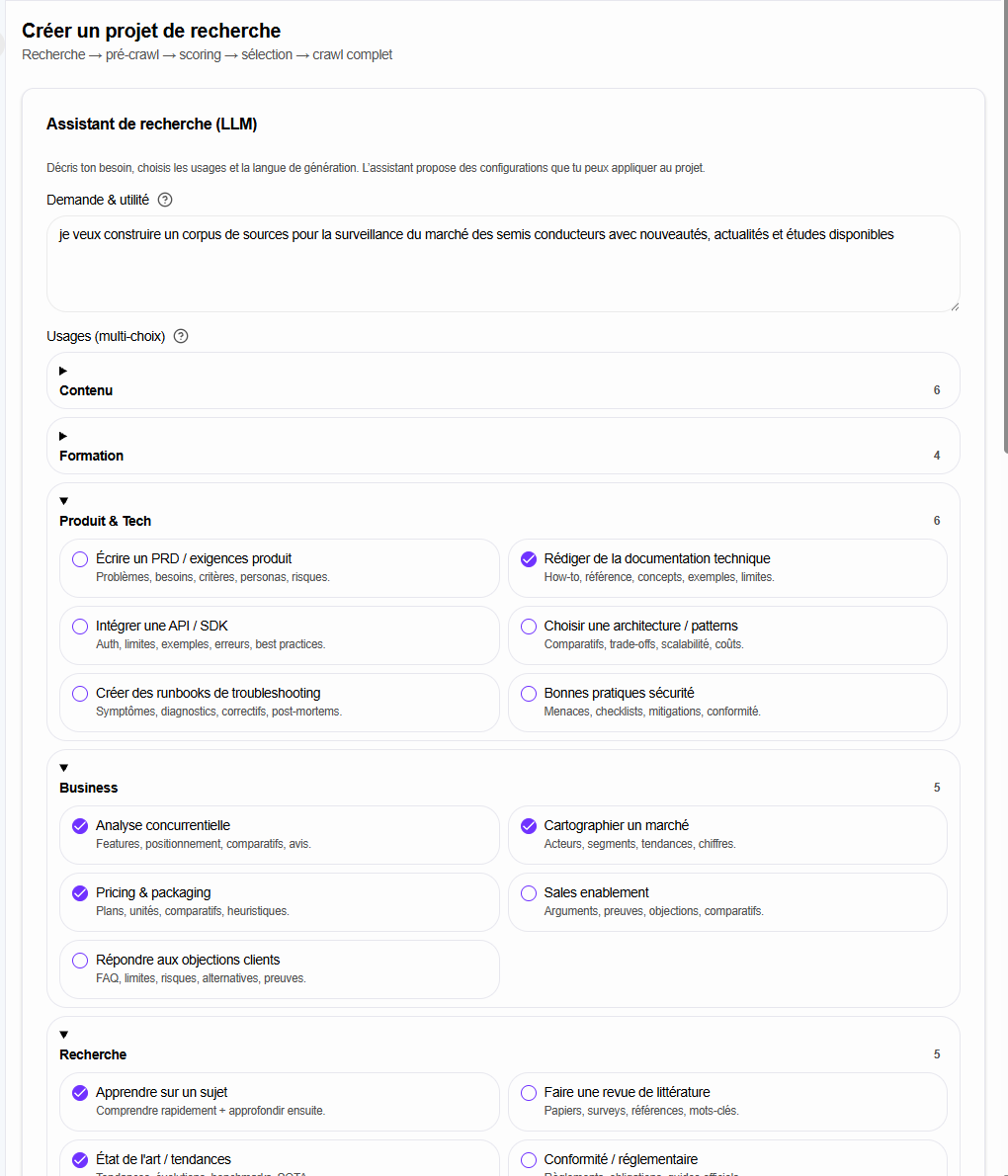
You have a subject to document, but not yet a reliable list of sources?
Research starts with your objective, preferred languages and the intended uses of the corpus. Atlas can propose a research strategy and suitable queries before any deep collection begins.
You remain in control of which suggestions are applied and can complement discovery with your own URLs.
Aurora Atlas
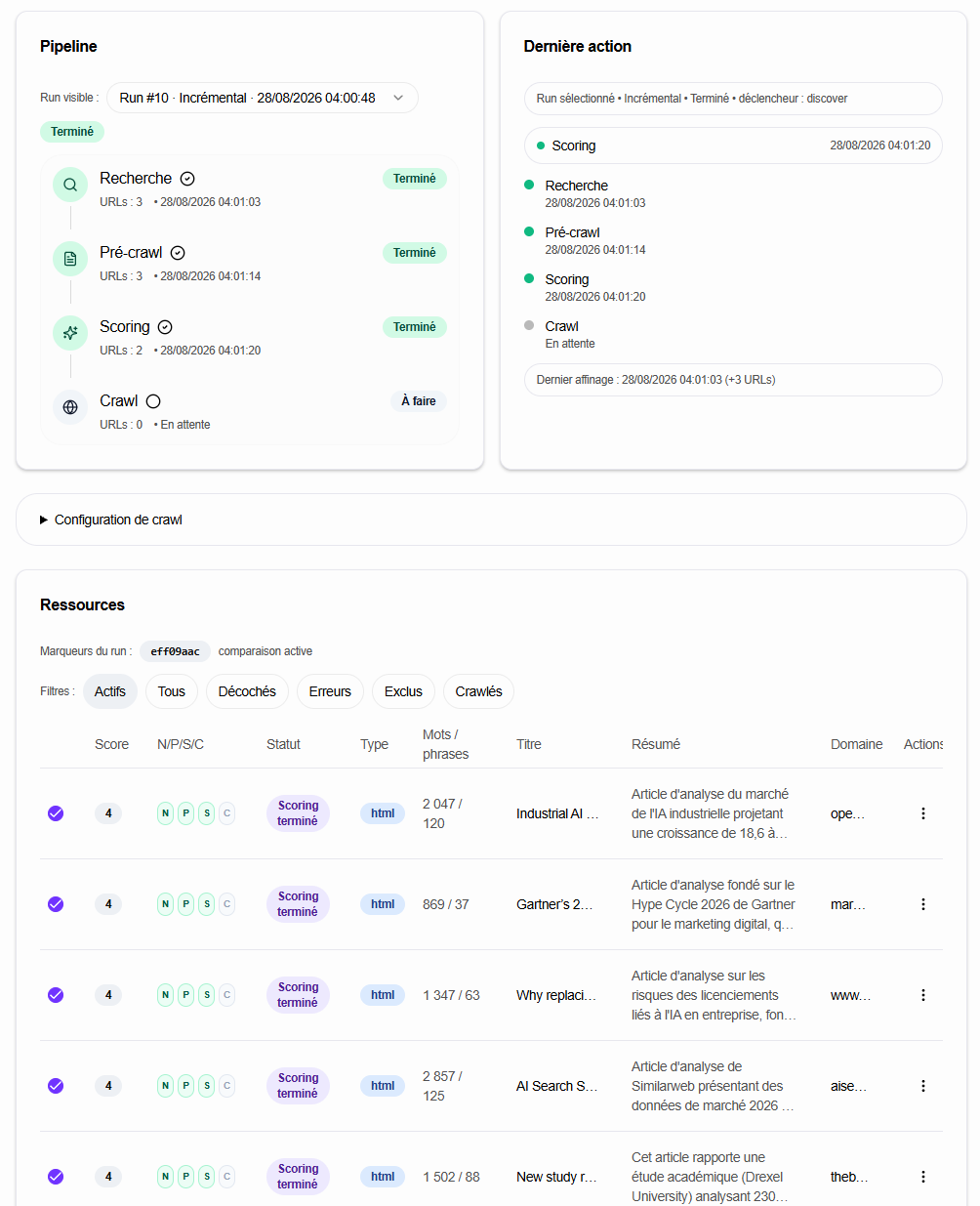
Collecting more pages does not automatically create better knowledge.
Before deep crawling, Atlas can extract representative content, apply deterministic filters and qualify each source across several dimensions: intrinsic quality, fit with the corpus, usefulness for the intended use cases and depth of content.
The result remains explainable: scores, summaries, verdicts, reasons and risk factors support the proposed decision.
Atlas proposes. You decide.
Sources can be manually selected or deselected before the final corpus is built.
Aurora Atlas
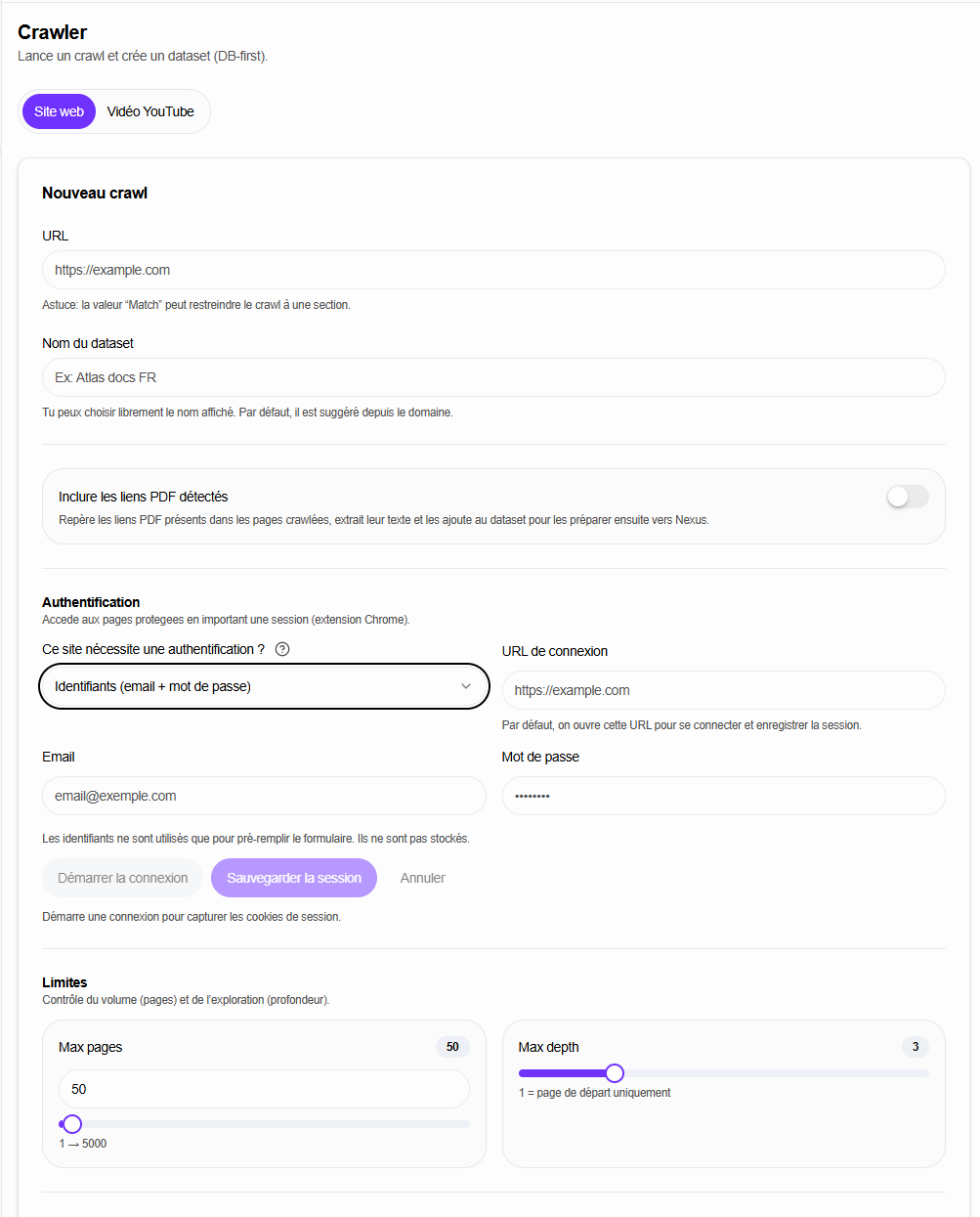
Research is not mandatory.
Atlas can also start from a website, sitemap or known URLs and explore only the relevant areas using inclusion rules, exclusions, depth limits and page limits.
Linked text-based PDFs can be added to the dataset, as can YouTube content when a usable transcript is available.
Websites, documentation, help centers, blogs, technical pages and text-based PDFs.
YouTube videos when supported subtitles or transcripts are accessible.
Atlas can reuse a compatible authorized session to access content available to your organization: supplier portals, premium documentation, extranets or professional platforms.
Atlas does not universally bypass CAPTCHAs, paywalls or security mechanisms. Access must be authorized and compatible with the target website.
Aurora Atlas
A web page often contains much more than the information you actually need: navigation, banners, repeated elements, short blocks, consent interfaces or other noise.
Atlas turns collected raw content into cleaner, structured documentary resources.
Mixed sources
Web pages · text PDFs · YouTube · news
Atlas processing
Extraction · cleaning · deduplication · metadata · structuring
Documentary corpus
Individual documents · Markdown dataset · manifest
Markdown is the reference format of the Atlas pipeline. Datasets can be retrieved for your own workflows or continue their journey into Nexus.
Atlas remains useful without Nexus.
Aurora Atlas
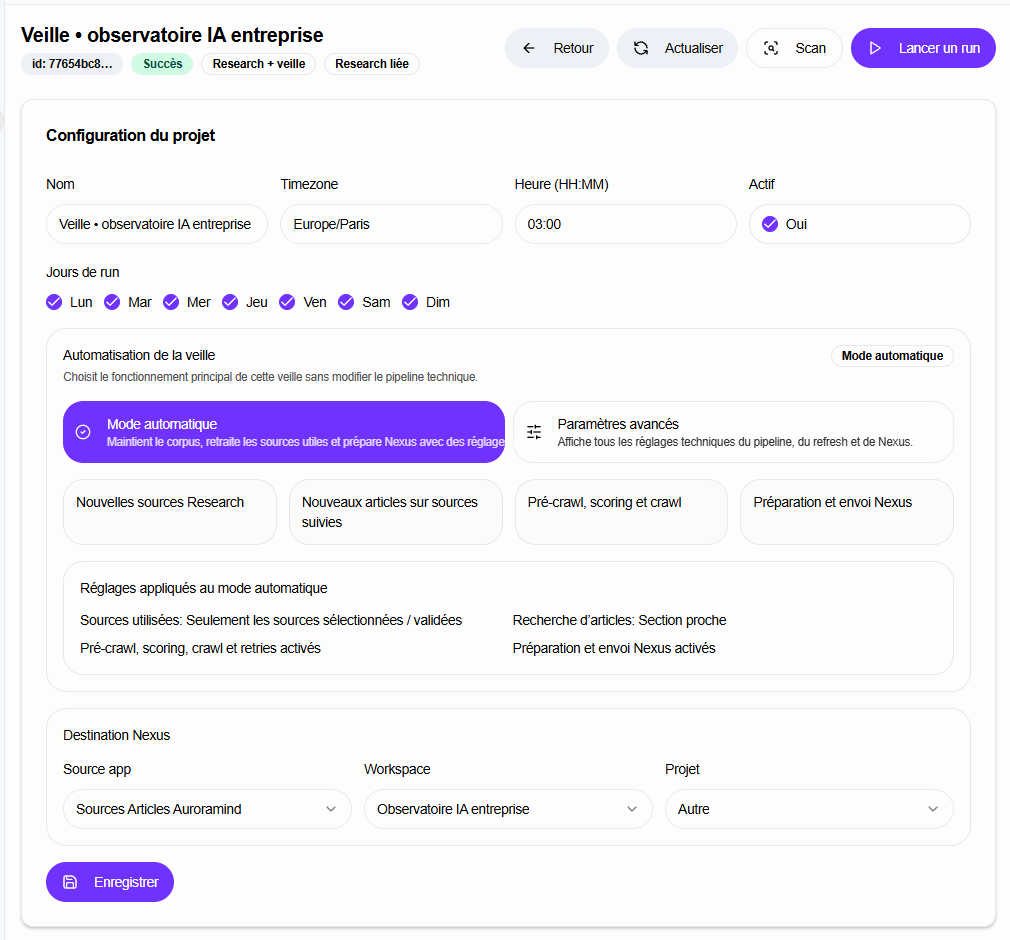
A regulation changes. A manufacturer updates its documentation. A competitor publishes a new offer. A technology evolves.
Rebuilding your entire corpus at regular intervals would be costly and generate a large amount of unnecessary processing. Watch provides continuity. Atlas can schedule monitoring of selected sources, detect their evolution and trigger the appropriate pipeline when needed.
Aurora Atlas
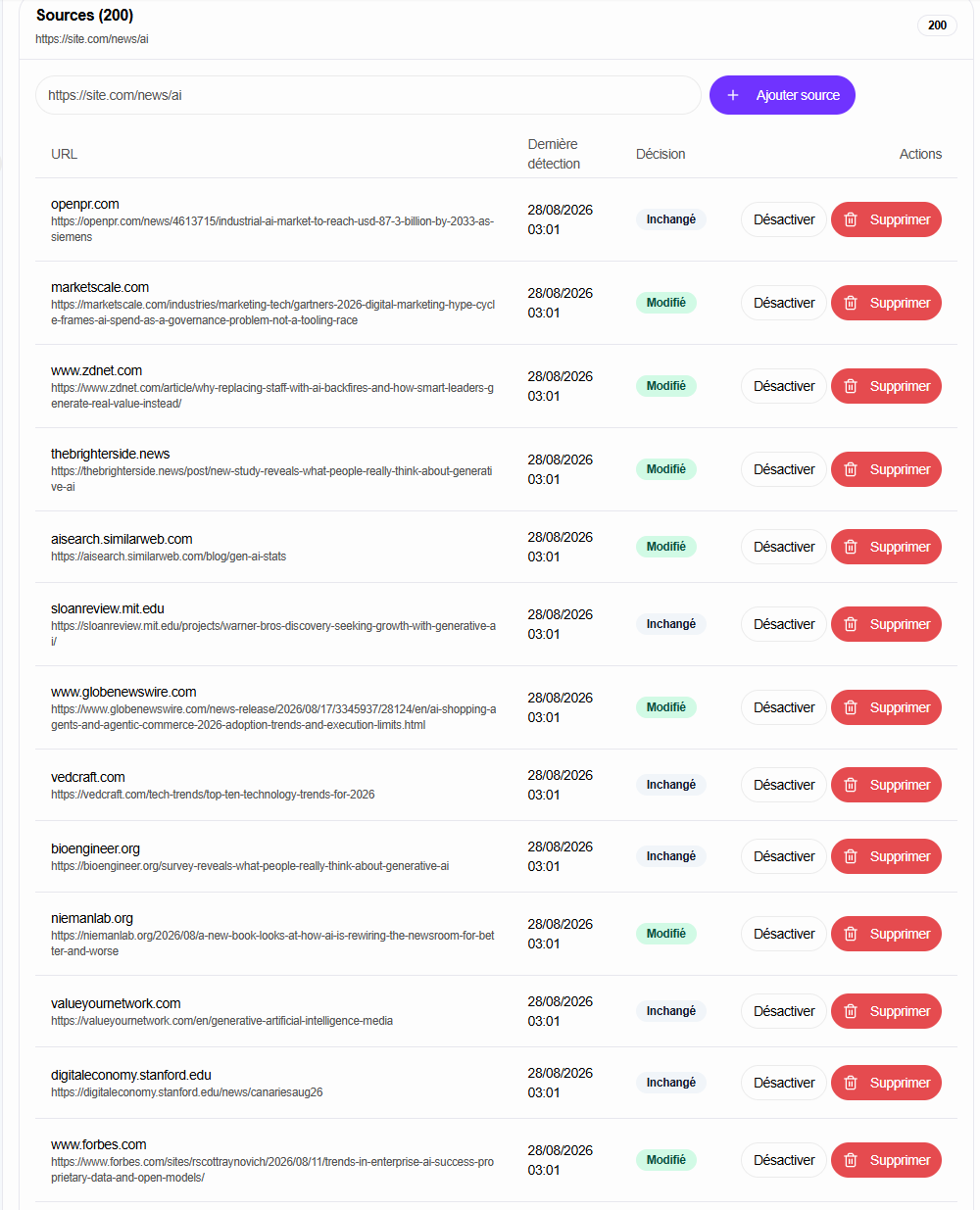
Atlas distinguishes modified sources from those that remain stable.
Change detection can differentiate meaningful editorial updates from technical or irrelevant variations, helping avoid rebuilding the corpus without a valid reason. An unchanged source can remain untouched. A modified source can re-enter the processing pipeline.
Maintaining knowledge does not mean starting over.
Aurora Atlas
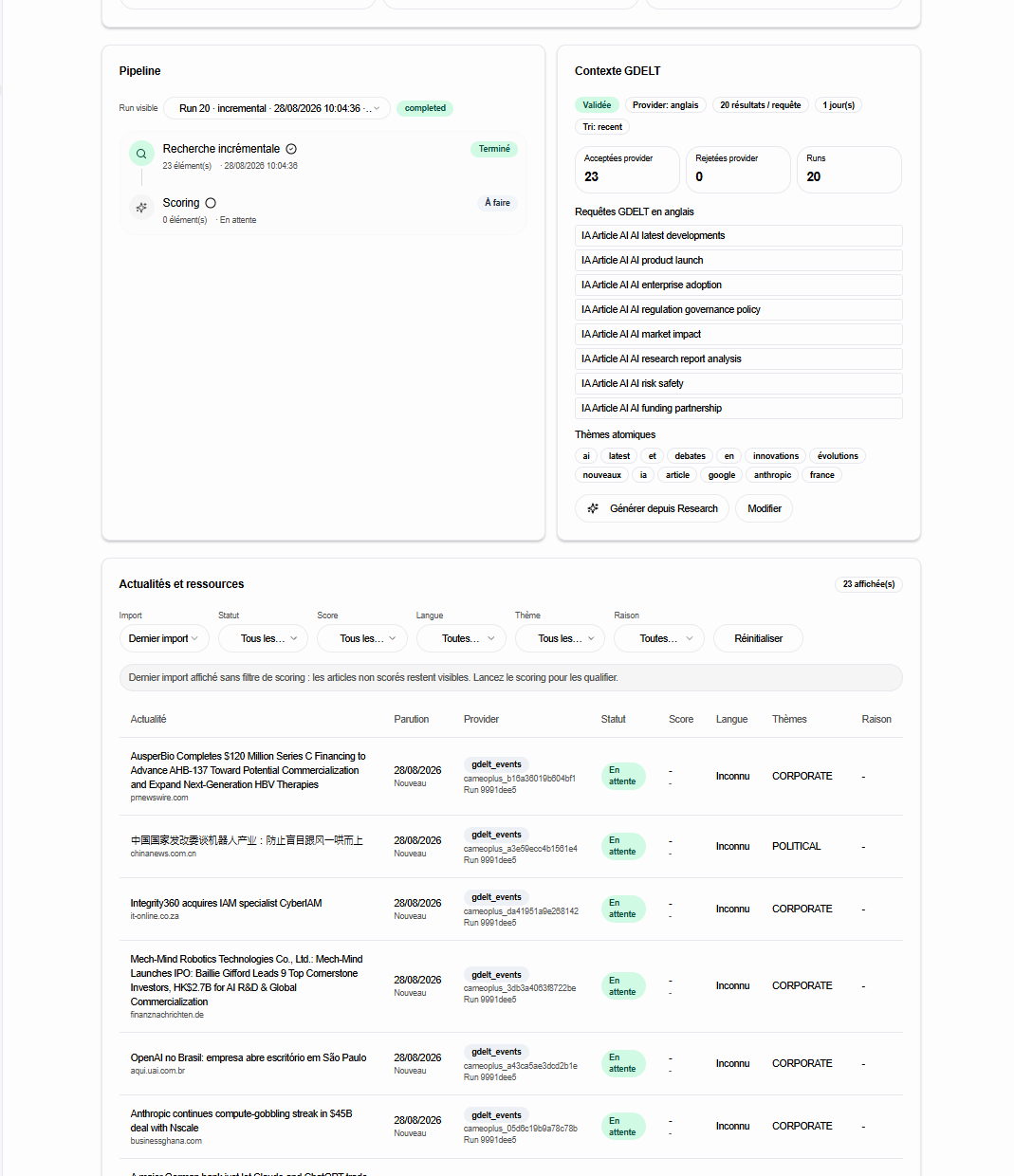
Some knowledge evolves because an existing source changes. Other knowledge evolves because entirely new publications appear.
Atlas currently provides a news feed based on GDELT Cloud v2, linked to Research projects.
Queries remain visible and must be validated before use. New results are deduplicated, qualified within the context of the project and can enter the same processing, Watch and Nexus preparation workflows.
Aurora Atlas
01
Monitor the official publications and reference sources relevant to your business so that teams and AI systems can work with an up-to-date documentary corpus.
Energy regulations, construction standards, sector obligations or professional recommendations.
02
Collect and maintain external technical documentation that complements your own procedures and business data.
A support agent can use both internal procedures and up-to-date documentation from the equipment manufacturers used by the organization.
03
Get more value from information your organization already accesses through subscriptions or contractual services.
A sector platform, extranet or compatible professional knowledge base can become a regularly refreshed source for your AI systems.
04
Build a corpus around a market, technologies, competitors or trends, then maintain it with new publications and updates from sources already selected.
Innovation monitoring, market intelligence, competitive intelligence or sector observatories.
Aurora Atlas
Atlas and Nexus operate at two different stages of the knowledge chain.
INTERNAL ORGANIZATIONAL KNOWLEDGE
EXTERNAL KNOWLEDGE CONTROLLED WITH ATLAS
AI applications and agents
AURORA ATLAS
Markdown datasets → your other systems
What your organization knows + what it needs to know about its environment.
ATLAS
Controls the acquisition and preparation of external documentary knowledge.
NEXUS
Then manages ingestion, indexing and exploitation of that knowledge alongside the organization’s other resources.
An AI agent for a construction company can therefore understand its own procedures and products while also using the regulations, manufacturer documentation and innovations that the organization has chosen to follow.
Aurora Atlas
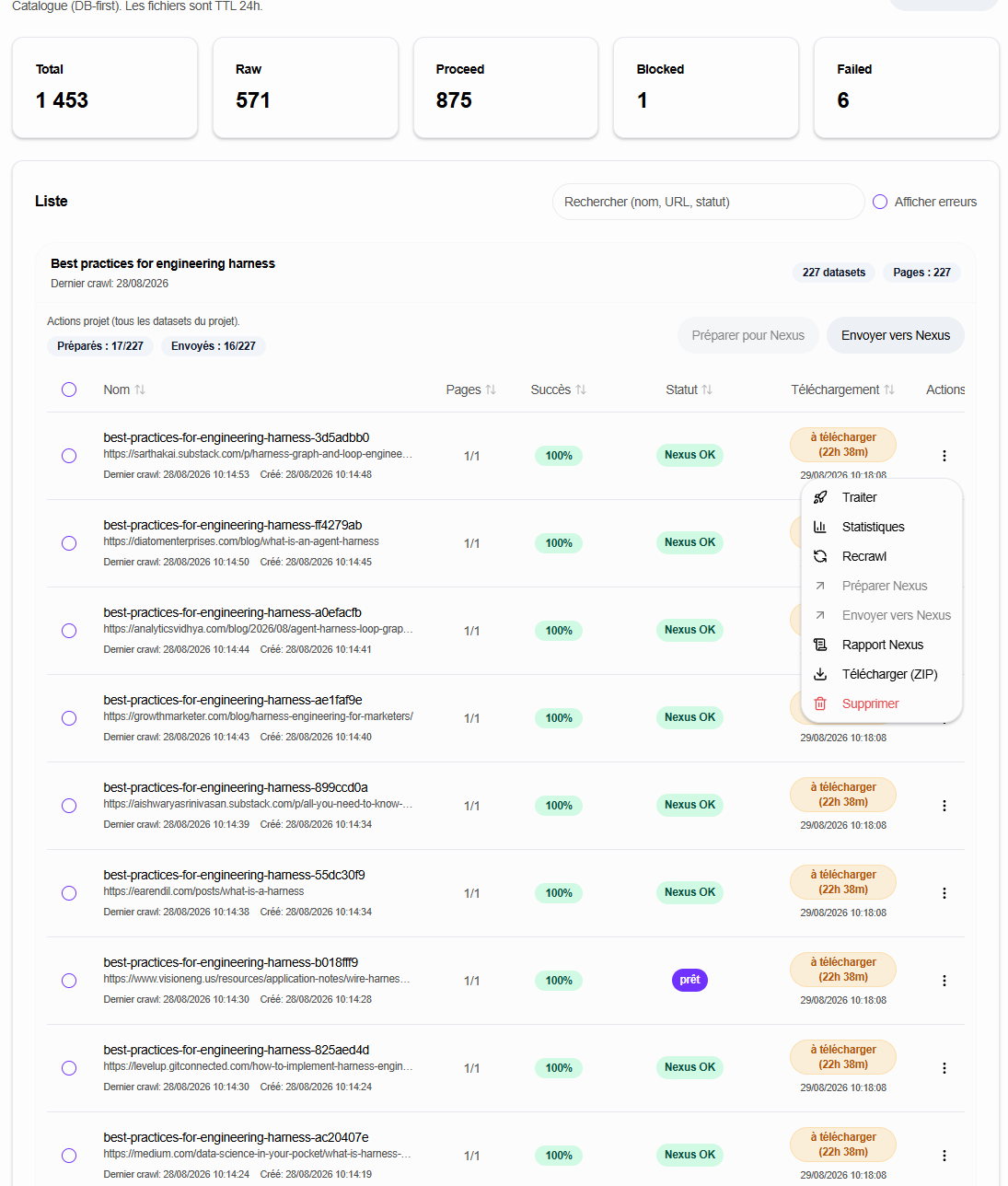
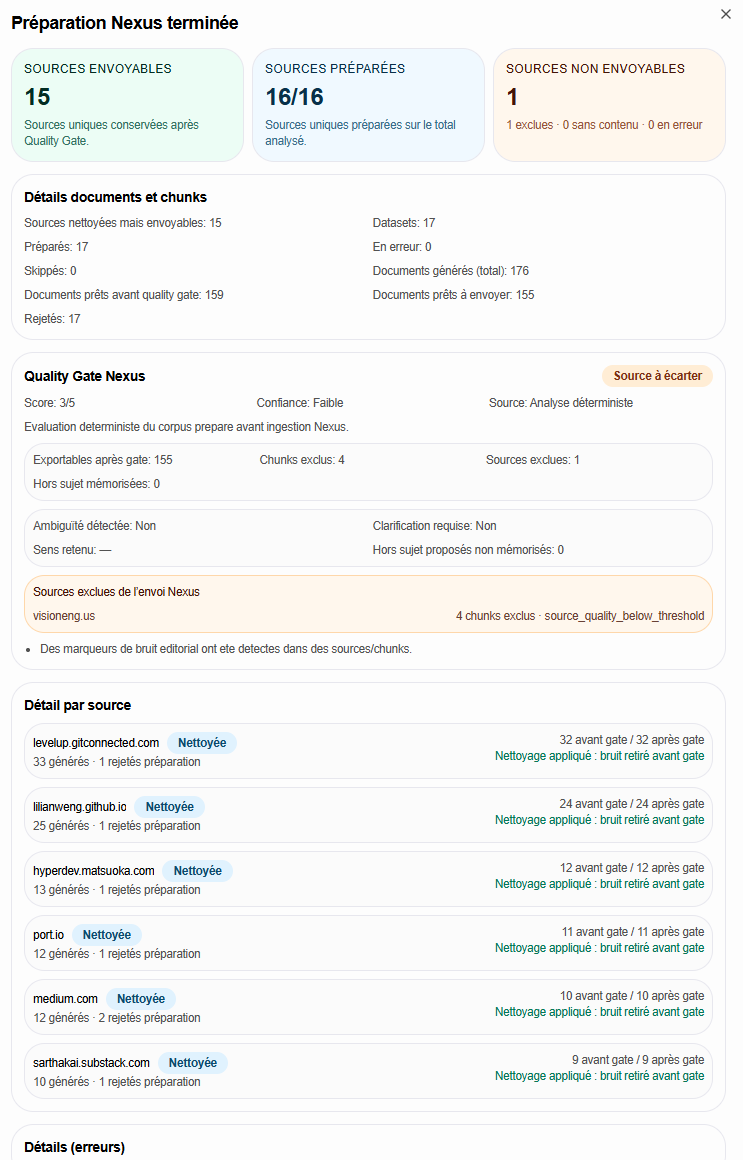
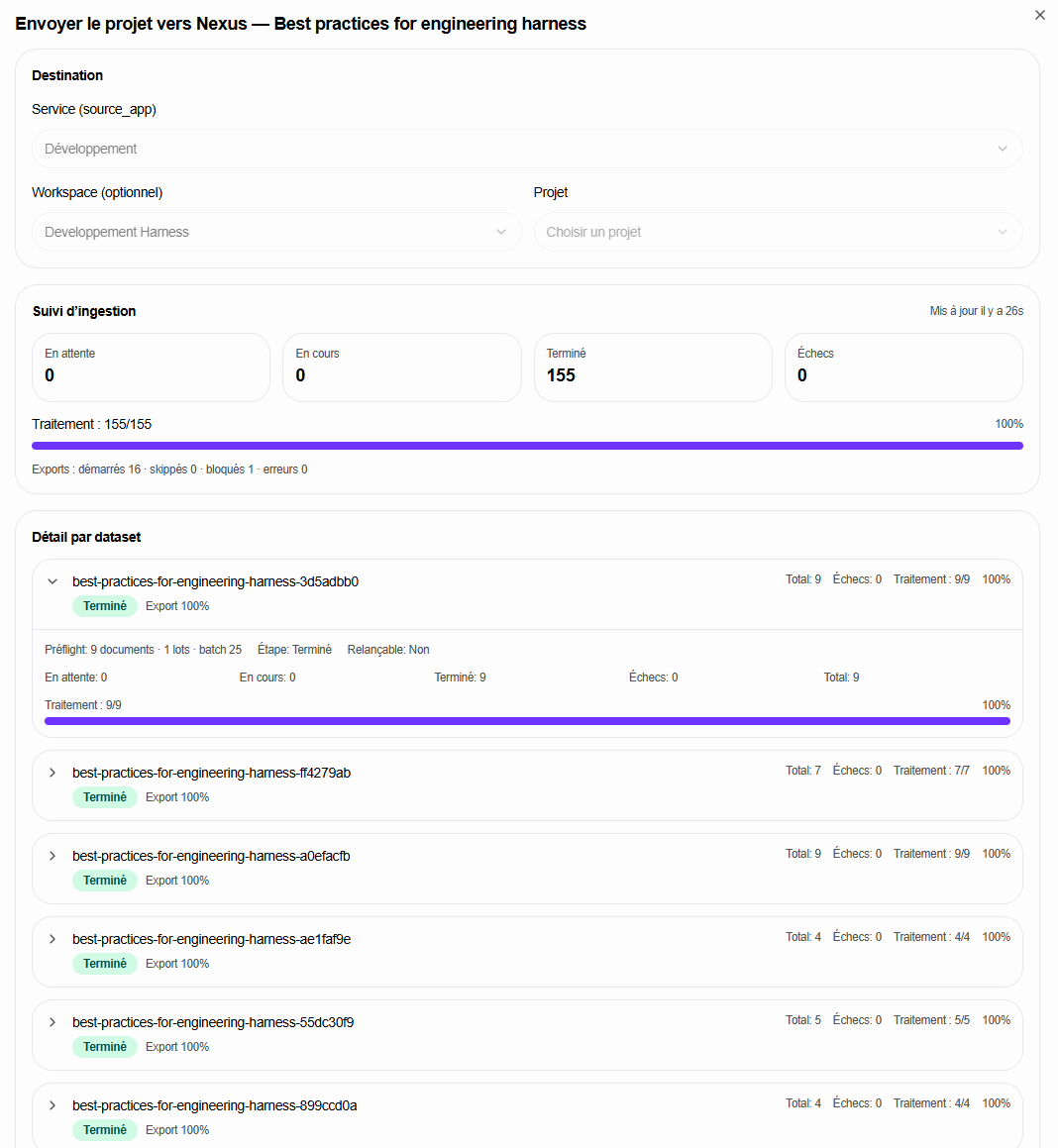
Preparing a corpus for Nexus does not automatically send it.
Before transmission, Atlas can apply a Quality Gate combining deterministic rules and, when configured, structured LLM analysis.
Resources can be cleaned, retained, excluded or flagged when uncertainty remains. The user keeps explicit control over the Nexus destination and triggers the transmission.
Prepared
Resources transformed and analyzed.
Sendable
Resources retained after quality control.
Excluded
Resources or chunks removed with an identifiable reason.
Aurora Atlas
Atlas can be deployed with Docker on infrastructure controlled by the organization.
Data and workflows are scoped to users, with separate user and administrator roles.
Provider keys and sensitive credentials are not directly exposed to the browser.
Each user can have their own Nexus token, stored encrypted server-side.
Atlas includes protections against unintended network access, with private networks disabled by default for collection.
Preparing a corpus and sending it to Nexus remain two separate actions.
Aurora Atlas
Aurora Atlas
Build a documentary corpus around a market, technology, regulation, your suppliers or professional sources.
Atlas helps you find, qualify, structure and maintain the information you actually choose to bring into your knowledge system.